 WillowForge Pest Care
Indoor Flea and Larvae Eradication Columbus
Residential flea infestations within Franklin County typically involve the cat flea ( Ctenocephalides felis ), an obligate parasite whose life cycle thrives in heated indoor microclimates. The reproductive biology of…
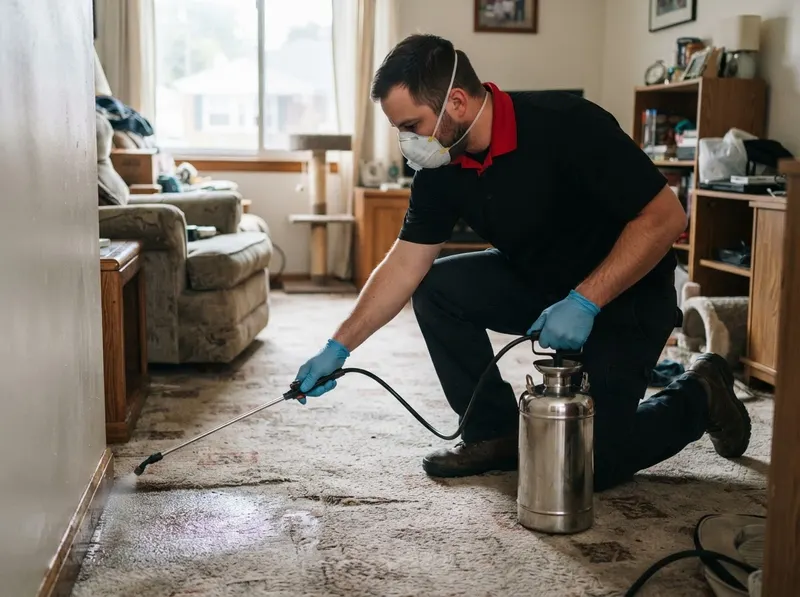
- What is included: Full perimeter interior barrier application, low-pile and high-pile carpet microencapsulation, upholstery treatment, and targeted Insect Growth Regulators (IGRs) halting larval molting.
- Arrival speed: Dispatched within 24 to 48 hours across Franklin County, with emergency same-day assessment windows available based on technician routing.
- Baseline investment: Ballpark treatments range between $200 and $450 depending on finished indoor square footage; exact confirmed on-site.
- Targeted materials: Ctenocephalides felis (cat flea) adults, larvae, and pupal caches harbored in baseboards, subflooring, and pet bedding zones.
- Scheduling process: Direct booking by contacting technician dispatch at (513) 812-8019 for pre-treatment preparation instructions.
Residential flea infestations within Franklin County typically involve the cat flea (Ctenocephalides felis), an obligate parasite whose life cycle thrives in heated indoor microclimates. The reproductive biology of this pest requires a dual-phase intervention because adult insects account for only 5% of the total biomass. The remaining 95% exists as eggs, microscopic larvae, and cocooned pupae tucked deep inside floor joists, area rugs, and upholstered furniture. In historic timber homes throughout German Village, Victorian Village, and Olde Towne East, wide-plank subfloors and settling floorboards provide deep cracks where organic debris accumulates, sustaining larvae that feed on adult flea droppings. Addressing this dynamic demands precision chemistries rather than indiscriminate aerosol fogging, which often fails to reach the base of carpet pile.
WillowForge Pest Care applies juvenile hormone mimics approved by the United States Environmental Protection Agency, specifically pyriproxyfen or hydroprene, alongside localized synthetic pyrethroids. These insect growth regulators disrupt the chitin synthesis of maturing larvae, preventing them from pupating into reproductive adults. Technicians conduct exhaustive acoustic and mechanical inspections along interior perimeters in neighborhoods like Clintonville and Upper Arlington, mapping pet loafing zones, underneath sofa frames, and behind warm appliance motors. Structural vulnerabilities, including baseboard gaps where larvae hide away from desiccating airflow, receive direct micro-injection treatments governed by structural pest control safety protocols overseen by the Ohio Department of Agriculture.
Eradication protocols follow a definitive four-step remediation sequence. Step 1 requires the property owner to strip pet linens, run a high-efficiency particulate air (NIOSH-rated HEPA) vacuum across all carpeted surfaces, and arrange veterinary administration of veterinary-approved topical ectoparasiticides via an accredited American Veterinary Medical Association practitioner. Step 2 involves a clinical inspection by a licensed technician to measure indoor humidity using calibrated hygrometers, identifying microclimates that prolong pupal dormancy. Step 3 consists of applying non-repellent residual compounds and juvenile hormone mimics directly into fibers and floor seams, following precise dilution guidelines maintained by the National Pesticide Information Center. Step 4 institutes a strict 14-day vacuuming regimen designed to generate physical vibrations, stimulating dormant pupae to emerge from silk cocoons into the freshly deposited treatment barrier before they can establish another reproductive cycle.
Choosing professional microencapsulated eradication over consumer flea bombs avoids common secondary hazards. Over-the-counter foggers disperse chemicals into ambient breathable air, settling onto kitchen counters and food preparation surfaces without penetrating the base of carpet yarns where 80% of larvae reside. Professional targeted application directs active ingredients exclusively into floor seams, baseboard channels, and foundation trim. In riverfront and valley microclimates near the Scioto Mile, Franklinton, and Grandview Heights, elevated atmospheric moisture can delay pupal emergence, extending the window during which dormant cocoons hatch. Properties with subterranean basements or attached crawlspaces near Bexley or Worthington Hills require comprehensive sub-level evaluations to verify that wild vector hosts, such as raccoons or opossums cataloged by the Ohio Division of Wildlife, have not established nesting sites beneath the floorboards, feeding new cohorts of fleas into the living quarters above.
How much does Indoor Flea and Larvae Eradication cost in Columbus?
Every job gets a firm, written price after a free on-site visit.
Common questions
How much does professional flea eradication cost in Columbus?
Are flea treatments safe for domestic pets and small children in Columbus homes?
Why do flea bites still occur after a complete home treatment in Columbus?
Do I need to leave my residence during the indoor flea application in Columbus?
How do historic Columbus building materials affect flea control outcomes?
Get started today
Tell us about your indoor flea and larvae eradication job in Columbus and we'll send a clear, written quote, usually the same day.